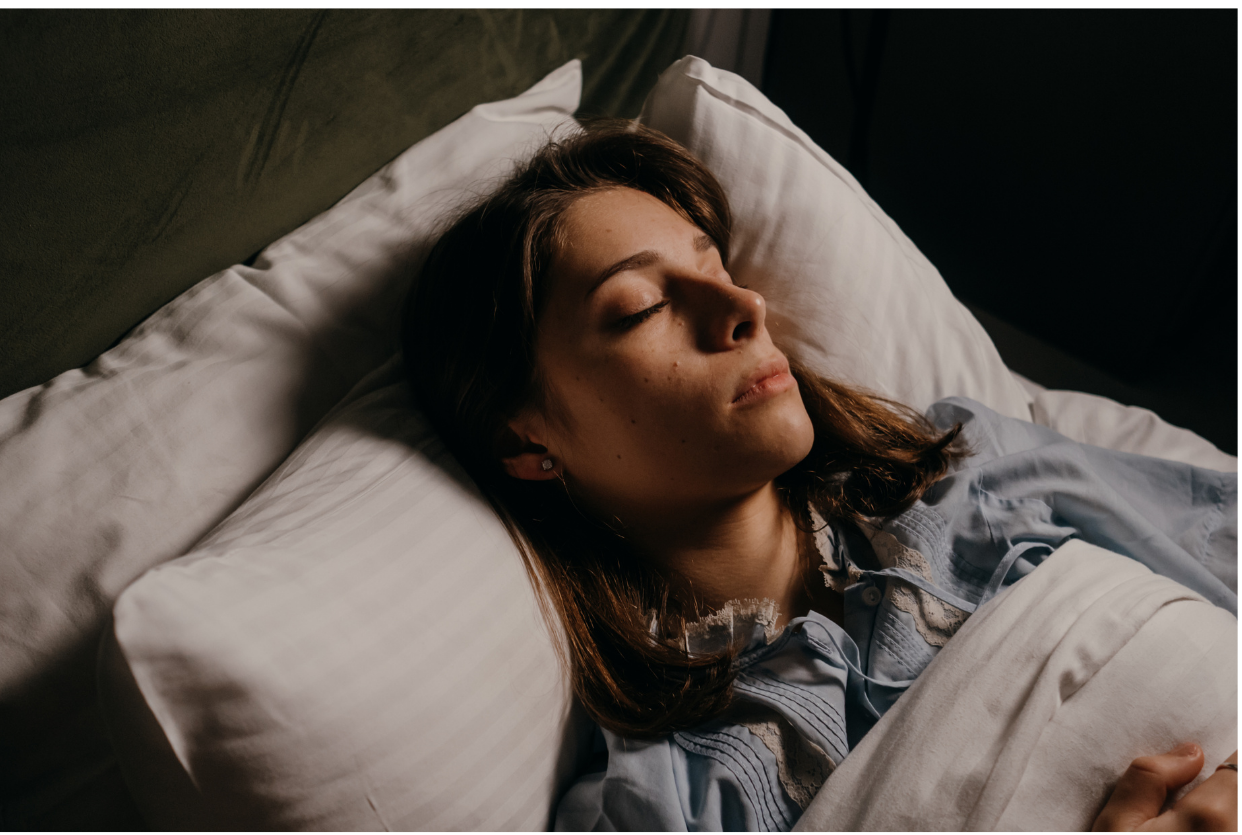

“Teeth grinding at night isn’t always about stress. If you’re waking up with a sore jaw, worn teeth, or headaches you can’t explain, there may be a different reason.”
You wake up with a sore or stiff jaw. Your teeth are wearing down. You have morning headaches. Your dentist tells you that you’re grinding your teeth at night and recommends a night guard.
For years that was the standard answer.
For decades, both the public and dental professionals were taught that teeth grinding, also called bruxism, was primarily caused by stress or anxiety. while stress can certainly play a role, we now know there is often much more to the story.
In many adults, grinding and clenching during sleep are important warning signs that the airway deserves a closer look.
What Is Your Body Trying to Tell You?
When you fall asleep, the muscles throughout your body relax. If your tongue falls back, your airway narrows, or your body struggles to get enough air, your brain doesn’t simply ignore it.
Your brain’s job is to keep you breathing.
One way it responds is by activating the muscles of your jaw. That response may appear as clenching, grinding, or other jaw movements during sleep. These movements can help reopen the airway long enough for you to take another breath.
The grinding itself may not be the problem. It may be your body’s attempt to solve another problem.
Teeth Grinding at Night: Why a Night Guard Isn’t Always the Right Answer
A traditional night guard protects your teeth from the forces of grinding. It does not address why the grinding is happening.
In people whose grinding is related to sleep-disordered breathing or obstructive sleep apnea, simply placing a conventional night guard over the teeth may actually make the airway less stable in some individuals. A standard maxillary night guard takes up space in the mouth and can push the tongue and jaw backward, which is the opposite of what an airway needs. In one clinical study of patients with sleep apnea, several saw their diagnosed severity worsen while wearing a conventional night guard, and most experienced more snoring time with the appliance in place.
That doesn’t mean night guards are always wrong. It means the cause of the grinding matters, and it means a night guard should never be your first or only step if there’s any chance your grinding is airway-related.
If the grinding is being driven by an airway problem, treating the airway should be the priority. Depending on the diagnosis, treatment may include CPAP therapy, a custom mandibular advancement device prescribed by a qualified provider, weight management when appropriate, positional therapy, or other medical interventions.
CPAP and oral appliances work by mechanically holding your airway open while you’re using them. That’s valuable, but it’s support in the moment, not a change to the muscles causing the collapse in the first place. Myofunctional therapy is often used alongside these treatments because it trains the tongue, lips, and airway muscles to hold up their end of the job, day and night, not just while a device is in place.
The first step is identifying the real cause.
Your Brain Is Choosing Breathing Over Deep Sleep
Every time your airway becomes threatened, your brain has a decision to make.
Stay asleep. Or keep you alive.
Fortunately, your brain chooses breathing. That means repeatedly pulling you out of the deep, restorative stages of sleep so your airway muscles can activate and you can continue breathing.
This repeated cycle shifts your body from its normal rest-and-digest state into a fight-or-flight response over and over again throughout the night.
Even if you never remember waking up, your body does. That is why you may sleep for eight hours and still wake up feeling exhausted.
Common Signs Your Teeth Grinding at Night May Be Airway Related
You may notice:
- Morning headaches
- Jaw pain, tightness, or stiffness
- Sensitive or worn teeth
- Neck and shoulder tension
- Daytime fatigue
- Brain fog
- Dry mouth when you wake up
- Loud snoring
- Mouth breathing during sleep
- Waking to urinate during the night
- Feeling unrefreshed even after a full night’s sleep
These symptoms often occur together because they share the same underlying issue.
Finding the Root Cause Matters
This is where a comprehensive myofunctional evaluation becomes valuable.
As an Orofacial Myofunctional Therapist, my job is not to diagnose sleep apnea. My job is to identify the muscle patterns, oral habits, and functional problems that may be contributing to airway dysfunction and determine whether additional evaluation is appropriate.
During a comprehensive myofunctional evaluation, I assess factors including:
- Tongue resting posture
- Whether there is enough room for the tongue to rest comfortably against the palate
- Nasal breathing versus chronic mouth breathing
- Tongue mobility and possible restrictions, including a tongue tie
- Swallowing patterns and tongue thrust
- Lip posture and oral muscle function
- Head, neck, and body posture that may reflect long-standing compensation patterns
These findings help connect the dots. They also help determine whether collaboration with your dentist, sleep physician, ENT, orthodontist, or another healthcare provider is appropriate.
Myofunctional therapy is not a treatment for sleep apnea. It is an important part of restoring healthy oral muscle function, improving tongue posture, encouraging nasal breathing, and supporting long-term airway health when used as part of the right treatment plan.
How Myofunctional Therapy Helps Your Airway
Here’s the piece that often gets left out of the conversation: your airway isn’t just an open space, it’s surrounded by muscle. The tongue, soft palate, and throat muscles all play a role in whether your airway stays open or collapses during sleep. When those muscles are weak, low in tone, or working in the wrong pattern, the airway is more prone to narrowing, which contributes to snoring, upper airway resistance, and obstructive sleep apnea.
Myofunctional therapy is a structured program of exercises designed to retrain and strengthen exactly those muscles, the tongue, lips, and oropharynx, so they do a better job of holding the airway open through the night and support nasal breathing during the day.
This isn’t just theory. A systematic review and meta-analysis of the research on myofunctional therapy for obstructive sleep apnea found that, in adults, it reduced the apnea-hypopnea index (AHI) by roughly 50 percent on average, from a mean of about 24.5 events per hour before therapy to about 12.3 events per hour after. The same body of research found that snoring time dropped substantially and that daytime sleepiness scores improved as well.
That’s why myofunctional therapy is worth exploring, whether you’ve been told you snore, you’ve been diagnosed with upper airway resistance syndrome, you have mild to moderate obstructive sleep apnea, or you’re already using CPAP or an oral appliance and want to support the muscles doing the work alongside it. It’s not a replacement for medical treatment when medical treatment is needed. It’s the piece that helps your airway function better long term, instead of just managing symptoms night after night.
Stop Treating the Symptom. Find the Cause.
Grinding your teeth is a symptom. Clenching is a symptom.
The question isn’t whether you’re grinding. The question is why.
If the answer is stress, your treatment plan should address stress. If the answer is an airway problem, your treatment should address your breathing.
Those are two very different treatment plans. Treating the correct problem starts with identifying the correct cause.
Together, we’ll connect the dots, determine whether your oral muscle function may be contributing to the problem, and help guide you toward the right next steps, so you’re treating the cause, not simply managing the symptoms.
If this sounds like you, I’m your person.
Your Questions About Teeth Grinding at Night Answered:
Is teeth grinding always caused by stress? No. Stress and anxiety can trigger bruxism, but grinding and clenching during sleep are also common signs of an airway problem, such as sleep-disordered breathing or obstructive sleep apnea. Identifying which one applies to you is the first step to fixing it.
Can a night guard make sleep apnea worse? It can, in some people. A conventional night guard is designed to protect your teeth, not your airway. If your grinding is airway-related, research suggests certain oral appliances not designed for airway obstruction may reduce airway stability. This is why finding the cause matters before choosing a treatment.
Can myofunctional therapy stop teeth grinding? Myofunctional therapy doesn’t treat sleep apnea directly, but it addresses tongue posture, mouth breathing, and oral muscle function that can contribute to airway dysfunction, one of the underlying drivers behind nighttime grinding and clenching.
What are the signs that teeth grinding is airway related? Morning headaches, jaw pain, worn or sensitive teeth, loud snoring, mouth breathing, waking up to urinate, and feeling exhausted despite a full night’s sleep are common signs your grinding may be connected to your airway.
Sources: Camacho M, et al. “Myofunctional Therapy to Treat Obstructive Sleep Apnea: A Systematic Review and Meta-analysis.” SLEEP, 2015. Gagnon Y, et al. “Aggravation of Respiratory Disturbances by the Use of an Occlusal Splint in Apneic Patients: A Pilot Study.” International Journal of Prosthodontics, 2004. This blog is for educational purposes and is not a substitute for a medical diagnosis. Myofunctional therapy does not diagnose or treat sleep apnea; it addresses oral muscle function as part of a broader care plan.